
As 2025 hands off to 2026, the scene repeats itself at finish lines across the country: runners coming through the chutes, medals around their necks, while beer sponsors pour pints in beer gardens a few steps beyond the recovery blankets and medical tents.
It looks familiar. It feels normal. It’s been a hallowed ritual for decades. But is it increasingly out of step with the culture surrounding it?
Running has never been purely about health. It has always lived in the space between discipline and release, sacrifice and indulgence. The post-race beer became shorthand for balance earned—run hard, celebrate harder. But that shorthand is now colliding with a generational shift that the sport is experiencing in real time.
Participation in running and triathlon continues to boom, especially among Gen Zers seeking both health and community. There have been record entry and finisher counts at Chicago, New York, and Honolulu in recent months that underscore that trend.
But alcohol consumption tells a different story. In August 2025, Gallup reported that only 54 percent of U.S. adults now drink, a 90-year low, and nearly two-thirds of Gen Z report plans to cut back further. The next generation of runners is arriving healthier, more data-driven, and far less attached to alcohol as a social currency.
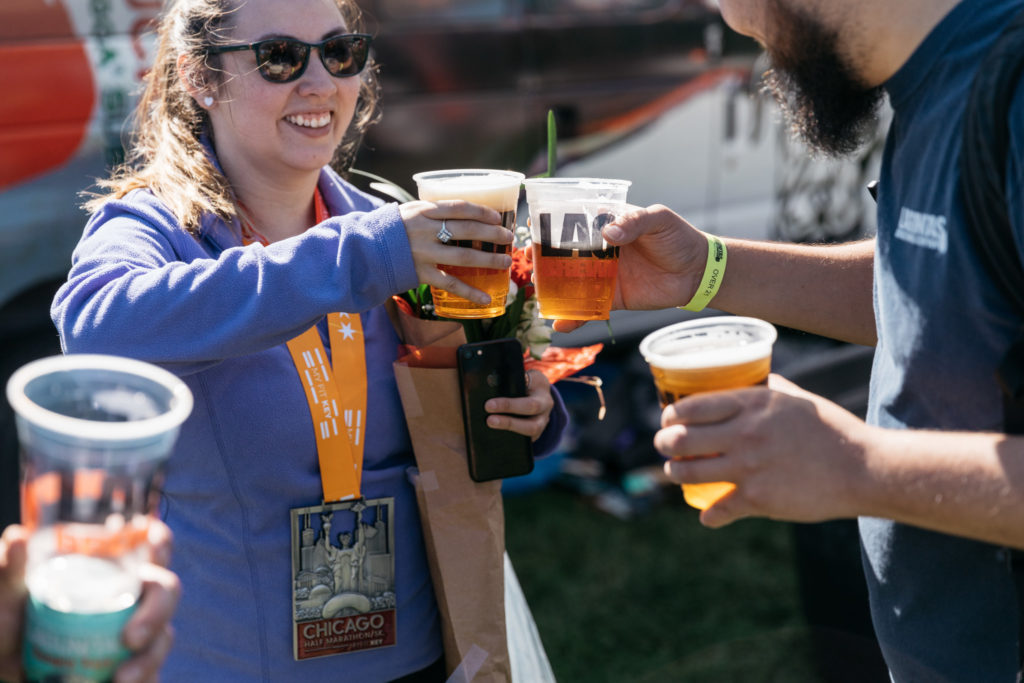
Yet beer sponsorships remain deeply embedded in running events. Yuengling, Shiner, and Samuel Adams all brew custom marathon lagers. Finish-line beer gardens remain full, but feel more inherited than requested.
This is not inertia by accident. It is strategy.
Beer companies, particularly as the hard spirits struggle and younger consumers opt out, are defending one of the last cultural spaces where alcohol still carries positive associations: endurance, reward, community. The runner crossing the line isn’t framed as a drinker, but as someone who has earned a cold beverage. That distinction has kept beer viable in a wellness-obsessed era.
Races like the Ascension Seton Austin Marathon illustrate the recalibration. Troy Aikman’s EIGHT Elite Light Lager isn’t marketed as indulgence but as alignment—lighter, cleaner, performance-adjacent. It signals where the sponsorship landscape is headed: not away from alcohol entirely, but toward alcohol that insists it belongs in a healthy life. Non-alcoholic beers have begun to appear in beer gardens, often poured as prominently as their alcoholic counterparts.
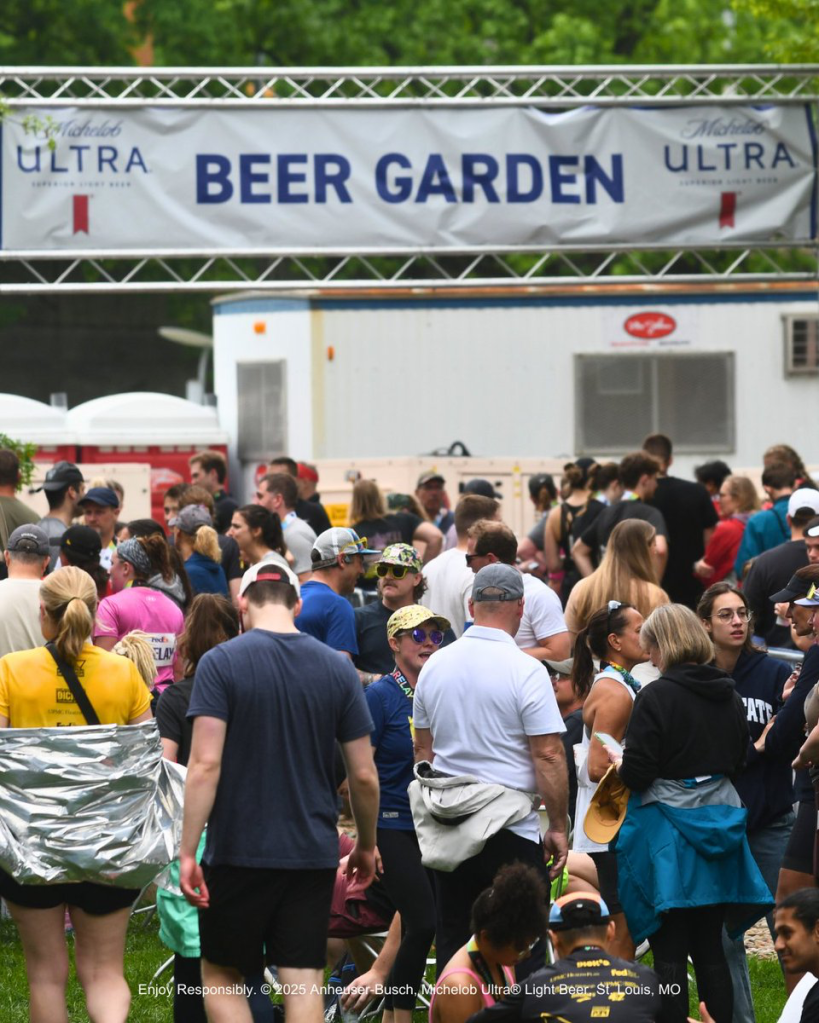
Elsewhere, the old rituals persist:
• Beer flights for finishers at the Yuengling Shamrock Marathon
• Shiner Bock handed to entrants at Texas beer runs
• Beer gardens anchoring finish festivals like Pizza Port at the Carlsbad 5000
This mix of hops and hauling isn’t accidental. It’s historical.
Light beer didn’t stumble into running. It arrived there deliberately. Believe it or not, Coors Light dates to 1941! But the real inflection point came in 1975 when Miller Lite–“Less Filling! Tastes Great!–broke through nationally in the heart of the first running boom. Bud Light followed in 1982. As mass-participation running exploded, light beer positioned itself as the acceptable indulgence for an active life. That association solidified into tradition.
But tradition does not ensure permanence. There are other troubling signs that point to a genuine crisis in the industry. On December 12, 2025, Anheuser-Busch closed its Newark, New Jersey, brewery after 74 years of operation.
Running today is more measured, more monitored, more self-conscious. Recovery metrics delivered by new tech replace gut feelings. Wellness gets quantified. Celebration is no longer assumed to involve alcohol. The finish-line beer, once symbolic, now sits alongside cold plunges, foam rollers, and non-alcoholic alternatives that are quietly gaining ground.
The paradox, then, isn’t that beer and running coexist. It’s that beer still dominates the symbolism of reward in a sport increasingly defined by restraint. Remember, it used to be run hard, celebrate harder. So what happens when people don’t run as hard anymore?
For now, the tents remain full, and the taps still flow. But the question has shifted. It’s no longer about whether beer belongs in running culture—it’s about whether the meaning that beer once carried can survive the coming runners who no longer view it as their definition of celebration.
Aye, it is not only the calendar that is turning, my friends; it is the great wheel of history, which replaces those at the top with those from below. Legacy still trades on nostalgia, but nostalgia doesn’t scale as new sentiments are born.
The next generation of runners races differently, and celebrates differently, too. They measure recovery in heart-rate variability and sleep cycles, not hops per pint. They chase clarity and camaraderie. And in their wake, the beer ritual starts to look less like reward than residue of a habit from a time when exertion and excess were easier to link. Think of dried foam on the glass like crusted sweat on the brow.
Every generation looks for its own cultural identifiers. We Baby Boomers didn’t dance to the big band music of our Greatest Generation parents. And Gen X popularized rap and hip-hop to differentiate from rock ‘n’ roll. Running’s turning wheel is no different.
So, while the impulse to celebrate won’t change—runners still crave a finish-line ritual to mark endurance and release—what is shifting is what that ritual says about the kind of balance they believe in. The culture hasn’t abandoned the post-race toast; it’s reconsidering what, and how, they’re toasting.
Happy New Year to all. Celebrate responsibly.
END
 tonireavis.com