
Today, America’s secular sporting holiday pits the New England Patriots against the Seattle Seahawks in Super Bowl LX at Levi Stadium in Santa Clara, California. From food and drink to gambling, to local economic impact, it’s annually the biggest weekend of the year.

Two years ago, Super Bowl LVIII was played in Allegiant Stadium in Paradise, Nevada, home of the Las Vegas Raiders. The economic impact was enormous, delivering an estimated $1 billion boost to the Las Vegas region.
But here’s a dataset that puts running into perspective.
Honolulu Marathon Weekend: Half a Super Bowl—Without the Stadium
The 2025 Honolulu Marathon weekend—which includes the Kalakaua Merrie Mile, the Start to Park 10K, and the JAL Honolulu Marathon—drew 43,000 entrants and generated more than $500 million in economic impact.
“Essentially half a Super Bowl,” said Honolulu Marathon Association President and CEO Dr. Jim Barahal.
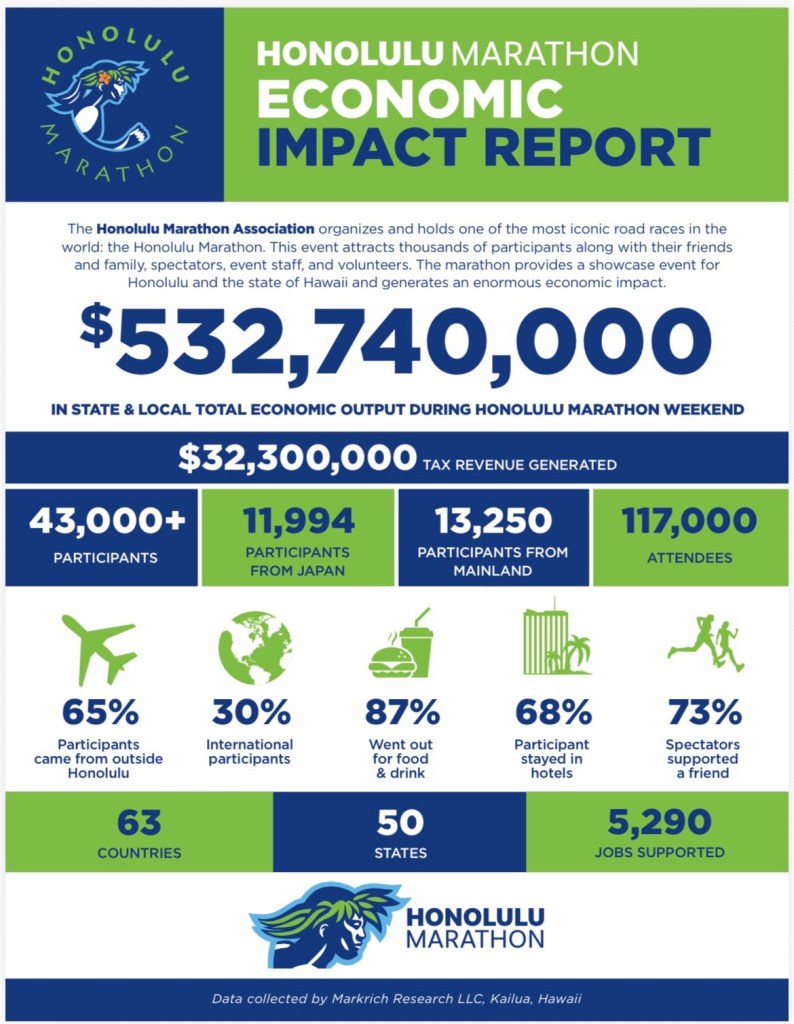
Data was collected through in-person surveys distributed at the Honolulu Convention Center race expo and on race day itself. More than 2,000 surveys were completed. Daily spending data was sourced from State of Hawaii tourism records.
“Hotel occupancy would probably have dropped into the low-60 percent range or below during that shoulder-season week,” Barahal said. “Instead, rates were significantly higher due to marathon demand—higher than they would have been otherwise.”
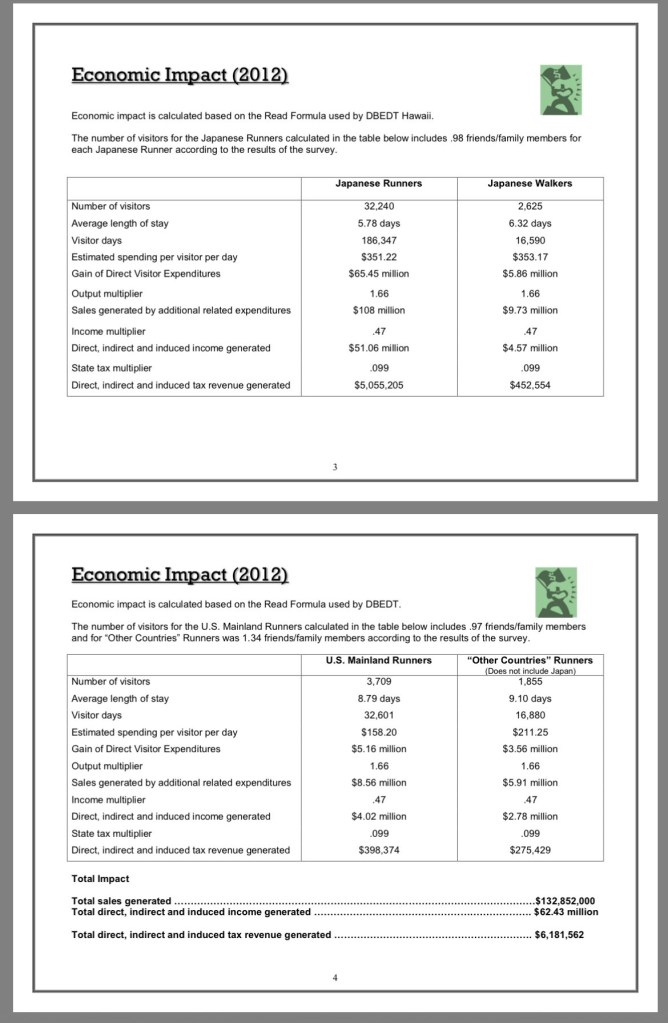
For historical context, a 2012 economic impact study showed that 31,000 runners generated $132 million in economic activity—approximately $187 million in 2025 dollars.
Barahal, a Michigan native, has guided the Islands’ signature running event since 1987.
“Companion spending wasn’t extrapolated—it was measured directly,” Barahal noted.
Importantly, local resident spending was excluded, preventing artificial inflation of the results.
A Demographic Shift Is Fueling Growth
Running participation surged to record levels in 2025, driven largely by Gen Z runners. The TCS New York City Marathon alone recorded 59,000 finishers, while the BofA Chicago Marathon received more than 250,000 entry requests.
Running was officially named “Sport of the Year,” with Gen Z reshaping the sport into something more communal and culturally visible.
In 2025, Gen Z accounted for:
• 38% of all 5K runners
• 39% of 10K participants
• 31% of half-marathoners
• 33% of full-marathon finishers
“I love that our biggest group from the mainland U.S. was ages 25 to 35,” Barahal said. “This represents a completely new economic model for marathons—and it’s still not fully understood or properly valued by host cities or even by the events themselves.”
Honolulu Isn’t an Outlier
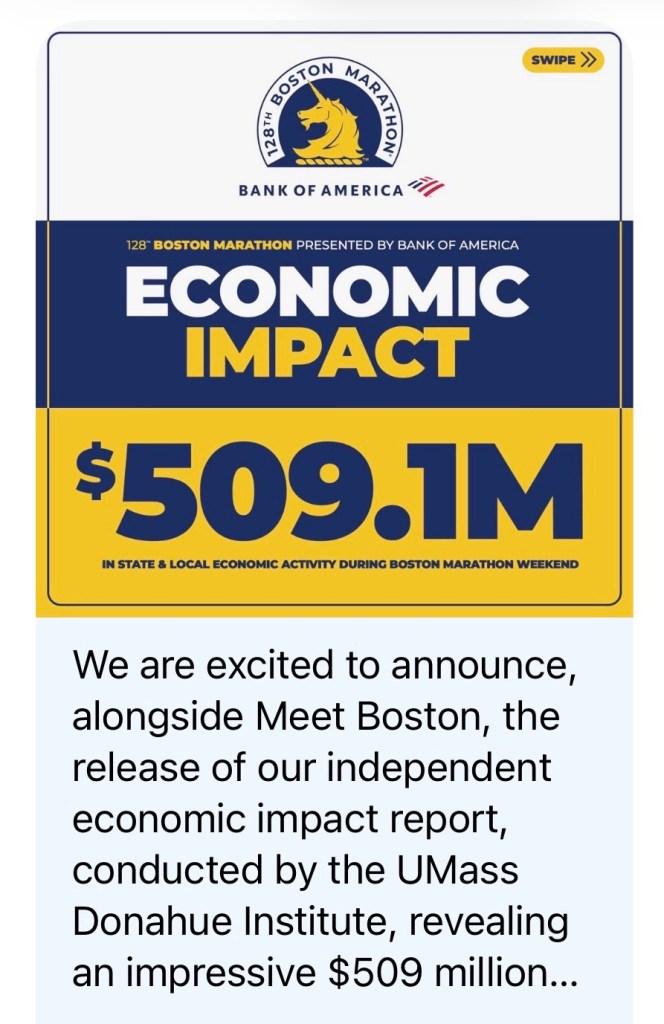
In November 2024, the Boston Athletic Association released its own economic impact study from the 128th Boston Marathon. The race drew 33,000 applications, with 29,333 runners accepted and 26,495 starters. The B.A.A. 5K added roughly 10,000 participants. Combined, the weekend generated $509 million in economic impact.
Elsewhere:
• The 2024 New York City Marathon generated an estimated $692 million, with all NYRR events combined approaching $1 billion, supporting over 5,000 jobs and producing $54 million in city tax revenue.
• The 2024 Bank of America Chicago Marathon contributed a record $683 million to the Chicago metropolitan economy—a 22% increase over 2023—supporting 4,589 full-time jobs and generating $229 million in wages and salaries.
Why This Matters
About a decade ago, race participation dipped as Baby Boomers aged out of competitive running. Then came COVID, isolation, and a reset.
What followed wasn’t a return to racing as much as a return to gathering. Few places realize human connection more fully than a marathon, where effort, commitment, and shared experience are visible, public, and communal.
While the Super Bowl lives up to its name, marathons have proved high-margin, low-infrastructure assets. Unlike a stadium that requires constant taxpayer upkeep, a marathon uses existing city streets to generate “Super Bowl-lite” revenue annually.
Comparison of Major Markets:
| Event | Year | Economic Impact | Participants |
| Super Bowl LVIII | 2024 | ~$1 Billion | ~61,000 (Stadium Cap) |
| NYC Marathon | 2024 | ~$692 Million | 55,000 (Finishers) |
| Chicago Marathon | 2024 | ~$683 Million | 50,000+ |
| Honolulu Marathon| 2025 | ~$530 Million | 43,000
| Boston Marathon| 2024 | ~$500 Million | 33,000
Enjoy the game.
END
 tonireavis.com
1′”
1-1 waitfor delay ‘0:0:15’ —
1-1); waitfor delay ‘0:0:15’ —
1-1; waitfor delay ‘0:0:15’ —
1*1
1