
The marathon did more than endure in 2025—it reasserted itself. As we await the results from this weekend’s MARATHON PROJECT in Chandler, Arizona, we can still read some tea leaves left behind from 2025.
Across sponsorship, participation, and performance, the sport’s flagship distance showed renewed commercial strength and cultural pull, signaling that the long-predicted decline of the 26.2-mile race has not only stalled, but reversed.
One of the clearest indicators came from the business side.

The two most iconic marathons in the western United States elevated longtime partners to title sponsorship status. In March, the Los Angeles Marathon formally became the ASICS Los Angeles Marathon, while in December, the Honolulu Marathon named Japan Airlines its title sponsor after four decades of support. These were not opportunistic brand swaps; they were deepened commitments, reflecting confidence in the marathon as a durable platform for global exposure and consumer engagement.
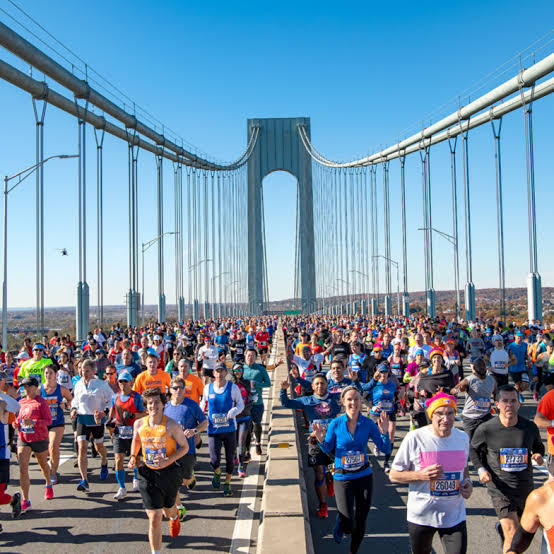
That confidence is being validated on the streets. The 2025 TCS New York City Marathon recorded nearly 59,000 official finishers, the largest field in its history. Honolulu, long regarded as the world’s most participatory-minded marathon weekend with no marathon cut-off time, welcomed approximately 43,000 runners across its marathon, 10K, and mile events. Chicago received more than 160,000 applications for its 2025 race, accepting roughly one in three entrants. And Sydney, buoyed by its addition to the Abbott World Marathon Majors, produced a record 33,000 finishers—cementing its place as a true global counterpart to the sport’s established giants.
These marquee events reflect a broader resurgence. According to Running USA, there were 432,562 marathon finishers in 2024, representing a five percent increase over pre-pandemic levels. And recall that numbers in all events were seeing slippage 10 years ago, even before the pandemic cut everybody’s legs out from beneath them for nearly two years.
While final figures for 2025 are still being compiled, early indicators suggest continued growth rather than a post-COVID plateau.
Perhaps more consequential than sheer volume is who is showing up. The 30–39 age group remains the backbone of marathon participation, but the 25–29 cohort is surging, up nearly 30 percent from 2023 to 2024. For a generation often presumed to favor shorter, more social formats, the willingness to commit to the sport’s most demanding distance marks a meaningful shift.
Male runners continue to comprise roughly 60 percent of fields, but female participation has reached 40 percent, a substantial increase from previous decades when women made up just 10 percent. This narrowing gender gap signals not only a more diverse running community but also growing commercial opportunity for sponsors and organizers alike.
The impact is already being felt on the clock. After decades of steadily slowing average finishing times—a byproduct of broader participation and aging fields—the trend has begun to reverse across age groups. Younger entrants, motivated by fitness, mental health, and the challenge of pushing personal limits, are training harder and racing faster. Advances in footwear technology and fueling strategies are amplifying these gains, reshaping what is possible for the modern mass-participation marathoner.
For much of the 21st century, the half marathon eclipsed the full distance as the most popular road-racing format. That balance has now tilted back: in 2025, 58 percent of long-distance race participants opted for the marathon. The field may be large, but it is also younger, more engaged, and more competitive than in recent memory—a demographic renewal that strengthens both the sport and its commercial ecosystem.
Taken together, the signals are difficult to ignore. Sponsorship stability, record demand, demographic renewal, and improving performances all point in the same direction. The marathon is no longer merely surviving in a crowded endurance marketplace—it is reclaiming its position as the sport’s defining challenge and a powerful expression of personal and collective ambition. Onward!
 tonireavis.com
Fascinating analysis. The increase in males 25-29 is specially significant after two decades when they have been elsewhere.
in the same sense that the Baby boom generation did not dance to the big band music of their parents, I don’t think Gen X went into running for exercise or competition. But one generation later, Gen Z found something that their digital life did not give them. And suddenly, we have our second running boom. Thanks for contributing.
toni