
Happy Boxing Day to all.
Toya shared an article with me this morning that caught my attention, and perhaps will catch yours as well. It came from Athletechnews.com, reporting on a surge in participation among younger athletes in Ironman triathlon—a trend that closely mirrors what we are seeing in the marathon world.
According to recent data, participation in Ironman events among athletes under 30 grew sharply in 2025. First-time participants in that age bracket have increased markedly since 2019, with full-distance races alone seeing a significant year-over-year rise. Whatever the precise percentages, the direction is unmistakable.
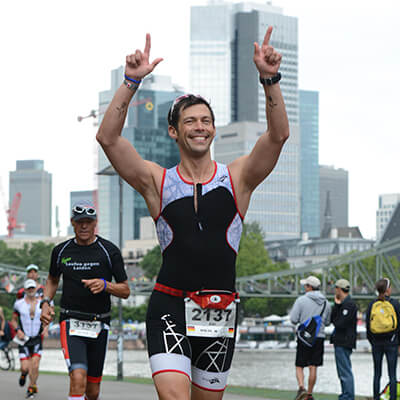
This is not a statistical outlier. It is an echo of the current marathon boom among younger runners. On the surface, the numbers resemble the running explosion of the 1970s. What interested me more, however, was not the growth itself, but the why behind it.
The Disappearance of the “Foot Soldier”
I received a response to my previous blog post, Remembering the Good Old Days: Happy Birthday Boston Billy, in which I reflected on the late 1970s, when Bill Rodgers was a genuine running rock star. A former Penn State walk-on offered a reply that added crucial context.
“It’s all or nothing today. There is the elite and the participants. For two years in the 1970s, I taught school full-time, went to law school five nights a week, and ran 110 miles a week. That was the best time of my life. Racing was so competitive. There are no more foot soldiers, and that is sad. Where did all the 25-minute 5-milers go?”
His observation captures something essential: the disappearance of the competitive middle class in sport. There are elites at one end and mass participation at the other, with far less space in between. It is hard not to notice how closely this mirrors the erosion of the middle class in American society more broadly.
“In the 70s, you didn’t have to be elite to be fast,” he continued. “You just wanted to get better. Today, that competitive middle has been replaced by a massive participant class.”
The Cost of “Whimsical Exploration”
Why the shift? Much of it, I believe, comes down to environment and economy.
In 2008, my parents uncovered a box of my old belongings in their attic. Inside was a tuition receipt for my final semester at Washington University in St. Louis in 1973. The total: $1,250. Today, a single semester at WashU costs roughly $34,000.
When I arrived in Boston in 1974, four of us shared a two-bedroom, 1,300-square-foot apartment in Allston. The rent was $160 a month—$40 apiece. Zillow now estimates that same address at close to $3,000.
In the 1970s, many of us had a window of financial latitude that made the whimsical exploration of running 110 miles a week possible. We were not yet crushed by the cost of existence. We could afford to direct our energy toward the endorphin promise of a hard tempo run rather than a constant, high-pressure hustle just to stay afloat.
Feeling Versus Connection
Today’s runners and triathletes are often seeking something different. Less a competitive outlet, more a decompression chamber.
Sign up for a marathon and you are committing to roughly six months of shared effort. Weekly long runs, group workouts, mutual effort. It becomes, in effect, a surrogate family—one forged by duration. In a world increasingly starved for connection, that matters.
If you were only training for a 5K, 10K, or even a half marathon, you would not require the same infrastructure or social scaffolding. Longer events demand community, and in return, they provide it.
We often credit a portion of the sport’s appeal to the “runner’s high.” There is truth there, but the science suggests that the classic endocannabinoid-driven euphoria requires sustained moderate-to-high intensity for roughly 30 to 45 minutes. Anyone who has trained seriously knows it does not appear on demand, but it arrives often enough to keep you coming back.
By contrast, spending five or six hours on a marathon course—or 12 to 15 hours in an Ironman—is a different physiological experience altogether. The reward is not primarily biochemical. It is relational.
If it is not the feeling, then what is it? It is the connection.
In an era when technology has atomized daily life—and when the echoes of COVID, remote work, and social withdrawal still linger—endurance events have quietly become modern “third places.” With alcohol consumption declining and traditional social hubs, like bars, losing their pull, these events now serve as one of the few structured, in-person communities left.
As more people—particularly young men—retreat into virtual worlds, endurance sports offer a tangible, physical counterweight to isolation.
The Long View
The foot soldiers of the 1970s were seekers of sensation: the hard-earned high, the personal reckoning of a PR. Today’s athletes are more often seekers of belonging. The inward pursuit of feeling has, for many, given way to an outward search for community.
And people are willing to pay a steep barrier-to-entry—often reaching $1,000 for a full Ironman—because the cost of isolation is higher still.
Fortunately, running, cycling, and swimming are generous enough to accommodate both impulses. Whether one is chasing a 25-minute 5-miler or a 25-person community that pulls them out of the virtual ether, endurance sport still offers a place to gather and explore life in depth.
Long live sport.
 tonireavis.com
Hi Toni,
As one of those “foot soldiers” from back in the 1980s, and somebody who has been working at the elite level of our sport for the past 30+ years, I thought I’d offer some feedback.
Looking back at my first year out of Boston College in 1981 and my two years in grad school, those “foot soldier” stats seem awfully familiar. 5:13 pace at 1981 Falmouth got me 119th; 5:01 pace at the Thanksgiving 1982 Manchester Road Race was good for 23rd; 5:09 pace at the 1983 Agawam Riverside Park 5 Miler (Not anybody’s idea of an elite event!) was 38th; 4:54 at the 1984 Milk Run 10K was 24th; and even when Bob Clifford and I pushed each other to sub-5:00 pace at the 1984 Freedom Trail 8-Mile Race, my 39:57 was only good for 28th, with Bob a second or two ahead in 27th.
But at any level, we were all always aware that we were competing and that we were in a foot race. Without fail, even finishing so far back, one of our first topics of conversation across the finish lines was to find out who won the race in which we just participated.
What I see missing these days is any general excitement among the ever-larger fields of runners over who actually won the event in which they just competed. I don’t know if it pertains to having a smaller group of these sub-elite ‘foot soldiers,’ or to the general trend of encouraging more and more people to take up the sport of running and to challenge themselves in events across their town and across the world without introducing them to the idea of racing. What we have perpetually missed is the connection between our mass runners, and the top people in our sport. It’s as if “racing” has become a totally disconnected concept.
The way I’ve often seen our problem over the years is by comparing it with golf. On most weekends of the year, there are tens of thousands of golfers out playing 18 holes on various courses across the country, with millions of fans. By and large, whether they just shot 76 or 106, many of these weekend golfers will then tune in later in the day to watch the day’s round of the Pebble Beach Pro-Am, the Greater Hartford Open, or the Masters. In contrast, the potential fan base of millions of participants in our sport has rarely wanted to watch running’s best competitors, not even 50 years after Fred Lebow first introduced big city marathoning to the world. Maybe it’s because the racing part of running is not part of their running DNA?
It was a “sport” back then, now a fitness and social activity. Sport involves various risks, which apparently today’s participants don’t want to take.
Tony, Social media gives us instant connection and gratification but a disconnect on the physical, emotion part. We can’t ignore our evolutionary need for physical connection and tribalism. These events require our presence and connection to each other. While we’d like to think we are superior to the other animals but we cannot deny our biology.
Back then Eugene and Boulder were cheap to live in. And the running community was very open. Great time to be a distance runner!
I think anytime is a good time to be a runner, but I do agree that being one back when things were getting started was a special time to be involved in the game. Thanks for responding. Have a great start to the new year.
Toni