
(For Frank Shorter, on his seventy-eighth birthday)
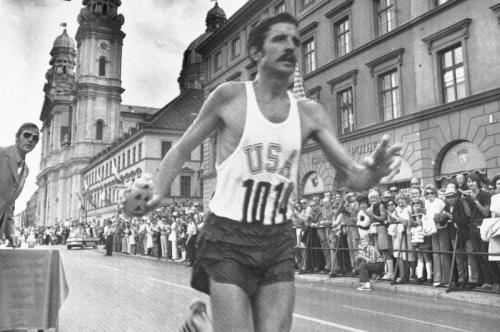
As the world awaits one of the grand racing traditions that emerged from the 1972 Munich Olympic Marathon—no, not the TCS New York City Marathon begun in Central Park in 1970, but the expanded five-borough extravaganza first run in 1976—we say, happy 78th birthday to modern marathoning’s founding father, Frank Charles Shorter.
Born on October 31, 1947, in Munich, Germany, where his father served as an Army physician, Frank would be joined two months later by the man who became his great rival, Bill Rodgers, who arrived on December 23rd. For history’s sake only, I came along days later, January 2, 1948—same generation, same tailwind of post-WWII optimism.
In those years, returning war veterans and their brides were spitting us out like watermelon seeds on a hot summer day. We were many, and we were fortunate—raised in a time of American abundance while much of the world still dug out from the ruins of war.
Two decades later, amidst what the French call l’âge ingrat—the thankless age—we came into early adulthood with attitude.
“Forget you, Mom and Dad,” we said. “We don’t want your gray-flannel, three-martini world. We want something freer.”
Of course, we never considered how the Great Depression and the Second World War had forged our parents’ restraint. All we hallowed was what we felt—the first generation with the leisure and freedom to make emotion a creed.
So we traded gray flannel for denim, hard liquor for soft drugs, and somewhere along the line—I think I know when—we discovered running. Not the competitive grind of coaches and stopwatches, but motion as release—a self-chosen exile from the noise and protest we thought would change the world.
When Frank Shorter ran to gold in Munich ’72, his stride as pure as the revelation it offered, we discovered running as our quiet confessional. What we couldn’t fix in politics, we tried to redeem in ourselves on the road. Each step became a minor act of order in a disorderly time.
Running filled the psychic space left by disillusionment. It asked for nothing but presence. It offered no ideology, only rhythm. It was democracy in motion—anyone could join, everyone suffered and celebrated equally.
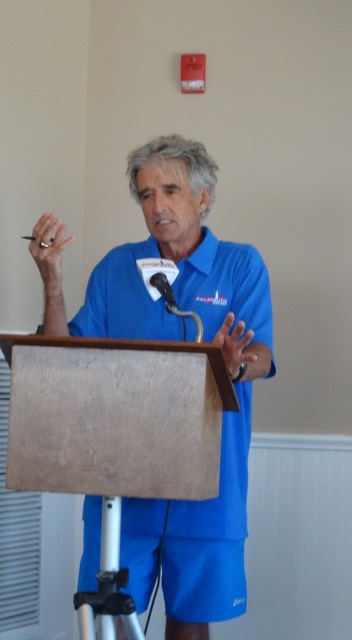
Now Shorter turns seventy-eight (2025). His stride has shortened, but his example endures: mastery through repetition, faith through training, defiance through action. His generation’s legacy isn’t medals or records; it’s the notion that persistence itself can represent meaning enough.
Half a century on, that notion feels newly urgent.
We live in an age of collapsing consensus, when “my truth” has replaced “our truth,” when even the facts wobble under the weight of grievance. Systems once trusted now feel rigged; faith curdles into contempt.
Historian Arthur Schlesinger Jr. warned nearly thirty years ago that the Computer Revolution would divide the well-educated from the ill-educated more sharply than any class before. He was right. The fracture is everywhere—political, economic, psychological. Argument only deepens it. Contempt has become the coin of the realm. And just wait for the full calving that artificial intelligence will bring to the workforce.
Yet against that dispiriting promise, running still remains the simplest contract between will and world: go forward, keep rhythm, endure.
That was Shorter’s message in Munich—don’t let fear and terror dictate terms—though few recognized it as a philosophy at the time. But even at an Olympic peak, when every fiber is self-focused, Frank was able to expand his scope to see what the moment demanded. His performance didn’t just represent sporting excellence; it was a reminder that clarity can still emerge from chaos, that effort itself can be redemptive.
The world feels fractured again. The dream that Ted Kennedy invoked in his eulogy for his slain brother Bobby in 1968 may indeed have long faded. But the road remains, patient as ever, unbent in its invitation, awaiting anyone willing to meet its measure.
Happy birthday, Frank.
The times are fraught once again.
So we do what we’ve always done—
run through them, capturing the moment, redeeming the day.
END
 tonireavis.com
Hey Toni,
Another GREAT post. Frank definitely set a tone in Munich that resonates today; that the simple act of running can provide clarity in the most chaotic of times.
It is hard to fathom where Frank found the inner strength and composure to compete at the level he did in light of the events at Munich alone. Given that Frank was born in Munich, the disappointment he felt in finding the hospital where he was born, in light of the revelation some twenty years later of his father’s sadistic abuse makes what he accomplished that day beyond surreal.
The most horrible injustice, next to the IAAF’s apparent refusal to throw out Chepngetich’s marathon WR, is the IOC’s refusal to disqualify Cierpinski from the 1976 and 1980 Olympic results, when he was UNQUESTIONABLY GUILTY of doping. Frank Shorter, is in reality, ONE OF THREE individuals to win the Olympic Marathon twice. Also, lets not forget that this makes Karel Lismont a two time Silver Medalist in the marathon, and that Don Kardong is the rightful winner of the Bronze Medal in the 1976 Olympic Marathon.
Running is, at times like these, truly the tie that binds….
Barry J. Lee
Thanks, Barry. Excellent reply. Yeah, we all can’t quite figure out why the IOC would redeem some medals, and yet others they keep intractable in place despite clear and convincing evidence. It short-changes the Athlete and history together.
toni