
In 2009, a year before he died at 98, my father looked back on his youth in middle America during the 1920s and ’30s and compared it to the lives of children growing up in the 21st century.

His conclusion was blunt: Millennials at age twelve were already more worldly than his Greatest Generation had been at twenty-five.
“We didn’t live in cities,” he told me. “We lived in neighborhoods.”
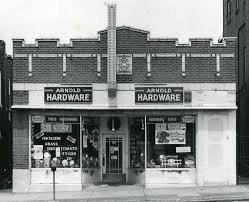
Even in my own childhood in the 1950s and ’60s, that was still largely true. On our block in south St. Louis, houses were known by the families who had occupied them for decades. The man at the local hardware store didn’t need to measure your windows—he already knew the width of your sashes.
When the neighborhood is replaced by the global stage, and the hardware store by Home Depot, children learn about the world long before they learn where they belong within it.
A twelve-year-old today can watch several wars unfold in real time, follow a celebrity in London, compare himself to an athlete in Brazil, and argue politics with strangers he will never meet, pretending to be somebody he’s not.
My father knew far less about his world at twelve. But he knew every family on his block.
The burdens of life today require more than physical strength to carry. Ask any young athlete who has buckled under the weight of expectation. The pressure is no longer local. It is global, relentless, and always online. Either you live up, or you feel down.
This Father’s Day, I watched a segment on Fareed Zakaria’s GPS about Nigerian scammers who prey not on greed but on loneliness. It struck me as a perfect metaphor for modern life. We now possess the greatest reach and, in many cases, the weakest connections.
We shop online, track packages on our phones, and monitor the porch through a Ring camera while hanging around on the back deck. The anchor department stores of our youth are gone. The malls closed long ago.
The future always charges a price.
It is paid in the currency of our past.
My father’s observation captured something essential. To be “worldly” at twelve means possessing an unprecedented awareness of the globe—but it came at the cost of the neighborhood.
There is a difference between being connected and being rooted. When a hardware store owner knows your window measurements, when a house is known by a family name instead of a street number, people are anchored. That anchor is a psychological safety net. Today, young people are thrust onto the global stage before they have formed a solid sense of self—competing not with the best kid on their block, but with the best of the entire world. Their sense of self is instantly compromised by scope.
The closing of malls and department stores, the shift to front-porch deliveries, and the migration of daily life onto digital screens have quietly erased many of the “third places” where community once happened by accident. Without them, loneliness stops being merely a private ache. It becomes a national vulnerability.
Yet over the past few weeks, as the World Cup has brought visitors from around the globe to American cities, we have all noticed something unexpected—and, oh, so welcome.
The Scottish Tartan Army filled Boston pubs with songs and laughter—and statues with orange street cones. German tourists posted delighted videos of their first experience at Waffle House. Visitors arriving with images shaped by headlines and social media seemed surprised to discover another America entirely.

What they are celebrating and sharing is not America’s power or influence. They are celebrating something older and more ordinary, the American neighborhoods my father once knew.
They found charm in corner bars, local diners, conversations with open, friendly strangers, and the easy hospitality that still emerges when people gather around a shared experience. In many ways, they are responding to the very qualities my father took for granted.
It is the same spirit that Alexis de Tocqueville noticed nearly two centuries ago—a civic warmth that lived not in institutions or grand ideals but in the habits of ordinary people. He saw a country where strangers spoke easily, where local life bound people together, where community was not an aspiration but a reflex.
That reflex still exists. It has simply lost some of the places where it once naturally flourished and needs only to be seen again to be recognized.
In that sense, our World Cup visitors haven’t so much discovered America as reintroduced us to ourselves.
It is the same spirit my father grew up inside without ever naming it, because in his world it was simply how people behaved. Today, neighborhoods must be chosen. For many of those who read this blog, that neighborhood is the running community.
The affection so many World Cup visitors have shown toward ordinary Americans suggests that the hunger for connection remains very much alive. The instinct to belong, to gather, to share stories with strangers survives beneath all our technology and distraction. Sometimes it takes an outsider to recognize what those living inside a culture no longer notice.
My father believed today’s children were more worldly at twelve than his generation was at twenty-five. He wasn’t wrong.
But perhaps the deeper truth is this: while we have gained the world, we have not entirely lost the neighborhood.
We have only stopped noticing when it appears.
Happy Father’s Day to all the men who gave us a neighborhood to come from, feel pride in, and willingly share with those who come round for look.
END

