
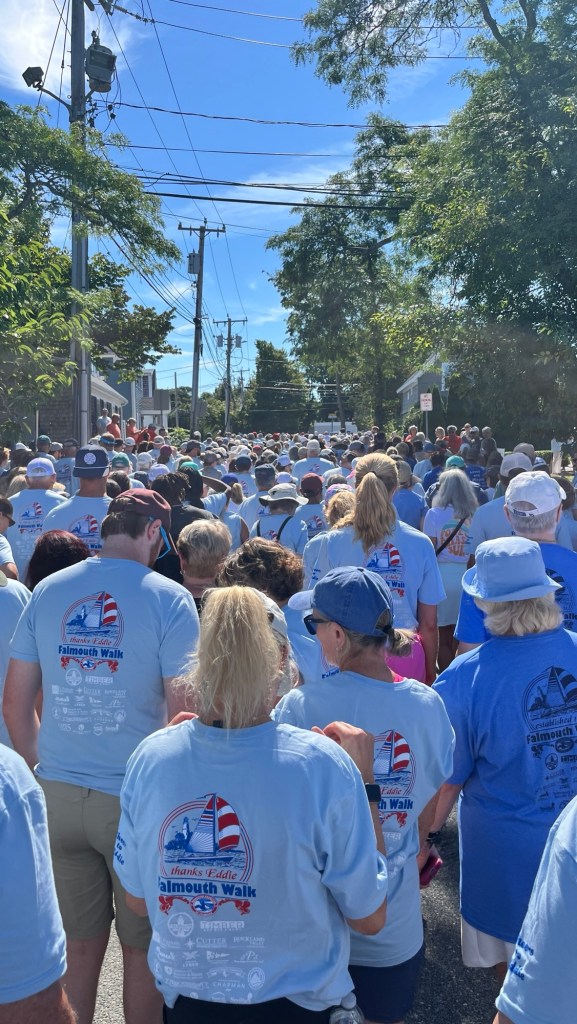
Just over a week ago, I was standing in the Saint Barnabas Church yard in Falmouth, Massachusetts, after completing the 35th Falmouth Walk. Old home week. New friends on the walk, old friends in the yard, everyone talking the good old times.
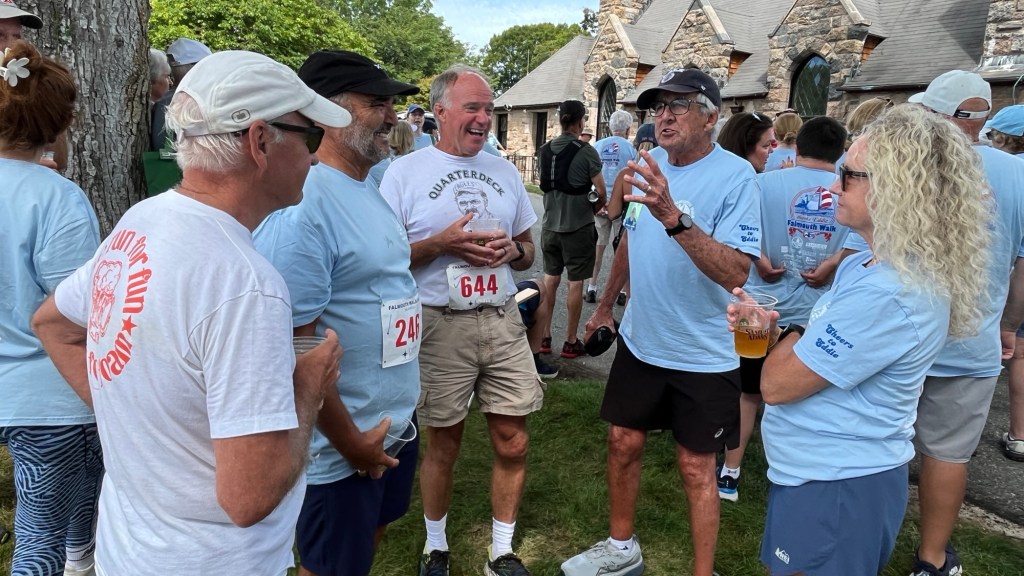
Frank Shorter’s wife, Michelle, told me the race that impressed her most wasn’t Frank’s Munich marathon gold but his fifth place in the Olympic 10000m five days earlier. “He was this close to bronze,” she said wistfully.
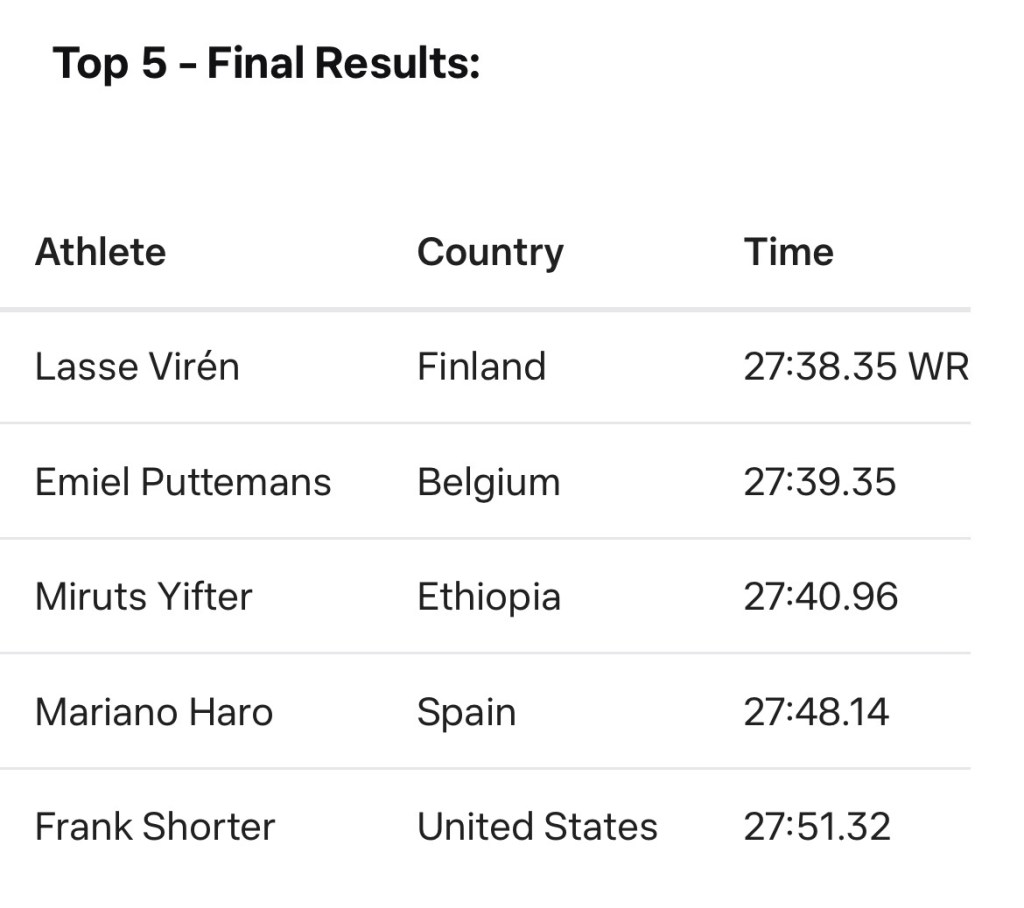
Not that close, actually. But he did set two American records in Munich. First, in the heats (27:58), again in the final. But add five days and 20 miles, and he jumped to the top step of the podium on Sunday.
Frank put it simply: he knew he had a 4:45 mile surge in him for the marathon that nobody else had. He knew because he’d run that in the 10,000m. So at 15K he threw the move, opened a gap, and on the winding Munich course got away, earned gold, and unknowingly began the boom.
Fifty plus years later, the past and present tied together again, from reminiscing at Falmouth to watching Ethiopia’s Yomif Kejelcha run 56:51 in Buenos Aires one week later, history’s first ratifiable sub-57 half marathon. In 1972 you could win an Olympic marathon with one surge. Now the whole race is the surge.
Money and technology have become the modern discriminators.
When open prize money hit the roads in the 1980s the global talent pool followed. As the roads grew more lucrative, the track 10,000m lost value outside the Olympics. Speed didn’t just influence endurance, it defined it.
Shorter won Munich in 2:12:19. Rodgers became famous in Boston and New York at 2:09:27 and 2:10:10. Their 5000m bests —13:26 for Shorter, 13:42 for Rodgers — were fast enough to compete on the track but not fast enough to medal much less win. But they could carry enough of their speed through hard training and savvy racing to excel on the long road.
Until Bikila in Rome 1960, the marathon was primarily endurance for those without track speed. That changed when prize money jumped from five figures to six.
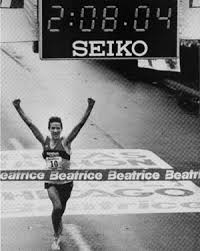
Steve Jones showed the old formula at its peak. Chicago 1984: plain Reebok singlet, no watch, sitting in the pack for 20 miles, then closing the final 10K in sub-30 for a 2:08:05 world record,
A year later he reversed tactics, and tried going out fast just to see. 14:18 at 5K, 28:48 at 10K, 61:42 at halfway, riding the ragged edge of 2:05 pace before super shoes were ever imagined. He held on for 2:07:13, one tantalizing second off the Carlos Lopes world record.
And just before the money era fully arrived, Mexico’s Dionicio Ceron became one of the last great expressions of pure endurance success, three straight London Marathon wins from 1994 to 1996, grinding out 2:08s without a track pedigree, without super shoes, without the accelerants to come. That was endurance racing.
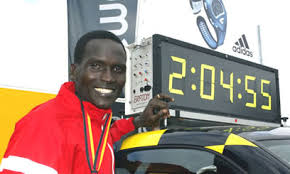
Before the roads created their own specialists, the fastest marathoners were aging track record men taking what speed remained up in distance. Paul Tergat, world records at 5000 and 10,000m, ran 2:04:55 in Berlin in 2003. Haile Gebrselassie, two Olympic 10000m golds and 3:33 for 1500m, lowered it to 2:04:26 in 2007 and 2:03:59 in 2008.
But even before Tergat and Haile, Ethiopia’s Belayneh Dinsamo set a world record that lasted ten years, 2:06:50 in Rotterdam in 1988, without track speed, without the modern marathon economy, without any of the later accelerants. He was the last world record holder built entirely on endurance rather than speed.
The others were track champions first. He was an endurance man. Together they marked the transition. Then came a generation with no track pedigree at all: Patrick Makau at 2:03:38, Geoffrey Mutai with 2011 Boston and New York course records, Wilson Kipsang at 2:03:23, Dennis Kimetto at 2:02:57. None had a memorable 1500, 5000, or even 10,000 times. They never bothered with the track.
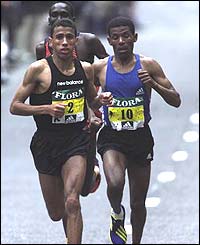
But before all of them stood Khalid Khannouchi, the prototype of the modern marathon specialist. The immigrant from Morocco had no elite 1500m or 5000m background, yet he broke the world record twice, 2:05:42 in Chicago in 1999 and 2:05:38 in London in 2002. He trained like a marathoner before marathon specific training became the norm. He would do speed work after his 20 miler because he knew he would need speed after fatigue set in. He was the precursor. Makau, Mutai, Kipsang, and Kimetto were the wave.
They professionalized 26.2 because that’s where the money had moved. For a few years pure road endurance, not borrowed track speed, held the world record. A Diamond League 10K paid a few thousand. A marathon major paid $150K plus appearance fees and bonuses. The marathon became a job you chose, not an event you graduated into.
Then speed reclaimed the record and never let go. Eliud Kipchoge, an Olympic 5000m medalist before ever running 26.2, took the world record in 2018 and held it for most of a decade. Another track record holder, Keninise Bekele, ran 2:01:41 in 2019, three seconds off Kipchoge. The pure marathon interlude was over. Top marathoners’ 1500m PBs dropped from 3:45 to 3:32. Endurance became speed carried longer.
World Athletics dropped the 10,000m from the revamped Diamond League in 2020. The sub-27 men lost their stage, their TV time, their contract leverage. If you were East African and this was how you built a house for your parents you followed the money.
The trend sharpened: Sabastian Sawe and Kejelcha under two hours in London this spring, Kejelcha running 56:51 for a half marathon. The bridge generation’s lesson, that pure endurance alone could hold a world record, turned out to be a five-year exception, not a rule.
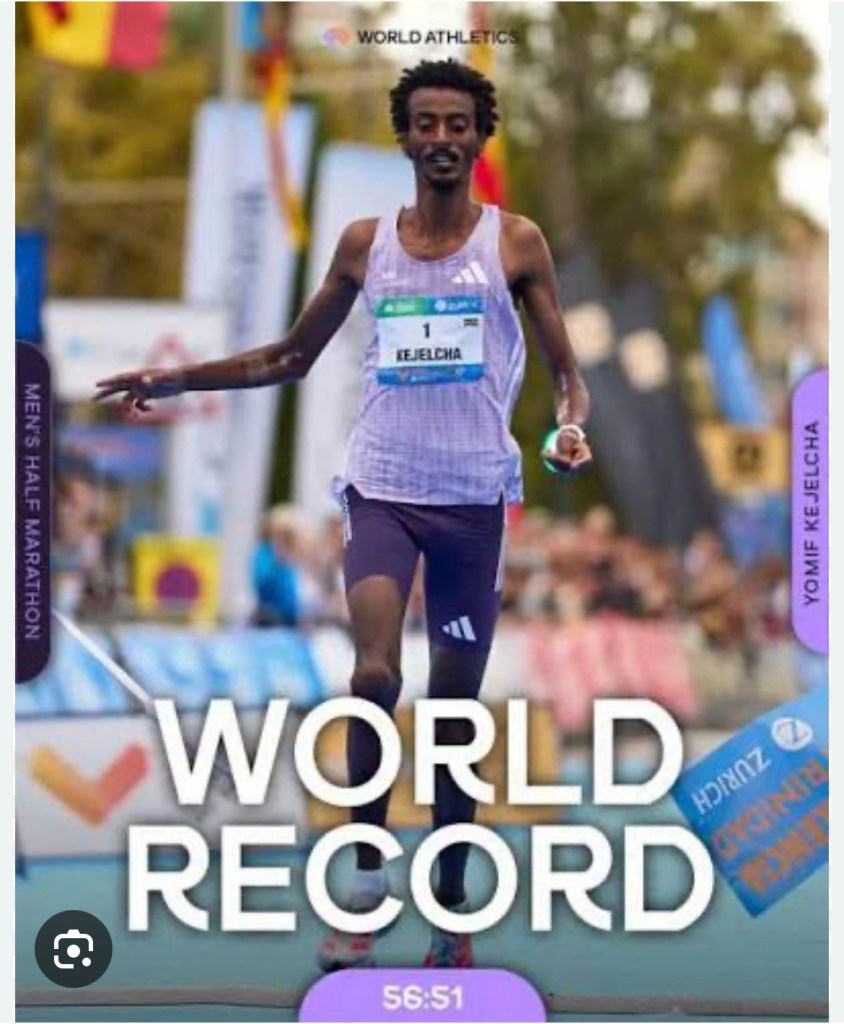
Three accelerants turned endurance into speed. One, Super shoes extended the fast twitch burn rate. Two, sodium bicarbonate plus fueling buffered acidity and allowed 100 to 120 grams of carbs per hour. Three, double threshold training spread through altitude camps. Result: 56:51 at 95 percent of marathon pace.
For Jones a half at world record effort would have been 105 percent of his marathon pace. That is why Kejelcha dances rather than collapses. Same distance, different sport.
True endurance today lies in the ultramarathons. But because there is no real money in it, the speed men haven’t arrived. UTMB pays €10,000. Western States hands you a belt buckle. A marathon major pays $150K plus appearance fees and bonuses.
The documentary Learning to Fly followed Jim Walmsley through Western States and UTMB. It was beautifully presented and generated buzz. But it had no African influx, no wave of sub-27 track men trading the roads for the mountain paths.
My guess, as with the roads, if real money ever does show up in the ultras – no guarantee, BTW, what with restricted fields and essentially zero public interest — the speed boys will arrive and transform those events, too.
Endurance has always been a moving target. A sub-four mile was once thought fatal. The first marathon ended with the Greek messenger’s mythic death.
Today, women already win outright at 100-plus miles. Courtney Dauwalter – 2017 Moab 240 miler – First overall outright. Jasmin Paris at Barkley. If we keep extending distance to find true endurance does the far end become a women’s sport? Maybe.
And maybe endurance was never about who could run a fast 1500m the longest. Maybe it will come down to who can keep going when speed itself loses value. One day being tough for six, ten, fifteen hours may pay. It has before.
The six-day pedestrian craze at New York’s Madison Square Garden was, at its height, America’s most popular spectator sport in the 1870s and 1880s.
But the problem with using speed as our discriminator rather than competition is that once all the recognizable barriers have fallen, and there’s no shiny object the public can easily comprehend, where do you go?
The official sub-two-hour marathon in London crackled because it broke a definable barrier. But 1:59:30 won’t hold the public’s imagination and something like 1:58:57 will be indecipherable — like a license plate clotted with 3s, Bs, and 8s.
We’ve trapped ourselves in a time addiction loop. So we move up the distance ladder again and again looking for new territory to conquer with speed.
Until money shows up where endurance still lives, we’ll keep mistaking velocity for durability and watching each enduring mark wilt like yesterday’s lettuce.
Wonder what they’ll be wistful about at the 50th Falmouth Walk?
END


I’ve always found running events to be a great way to stay motivated and make fitness more enjoyable. Whether it’s a 5K, 10K, half marathon, or a longer-distance race, participating in an organized event adds a sense of purpose to regular training. The atmosphere, community support, and feeling of crossing the finish line can make the experience really rewarding. For anyone looking to become more consistent with running, joining a local running event can be a great place to start.
it is another great piece of writing, Toni! You churn these out but only because you are so passionate about the subjects, the history and your personal connection with many of the people. Thanks for this one. Jack
Where would big money come from in the ultras. And why. The big paying marathons have 10 of thousands of entrants who pay the bills. Can’t see that in ultras. Which is good. When I lived in Boulder years ago the most boring athletes by far were ultra runners. All they talked about was their training. Also I don’t think its a coincidence that some of the best ultra people have a history of depression. Doing a hundred once is fine but over and over seems a bit over the top.
Oh, I agree it isn’t likely to happen. I’m just saying that’s the last bastion of endurance in this tech-advanced age. But absent money, the Africans won’t go there. However, if they ever do somehow find a honey pot, you can bet your bottom dollar that Africans will show up in numbers.
As for boring, that’s a personal assessment. I’ve spoken with many ultra runners who I found to be engaging and thoughtful. But that’s another column. Thanks for contributing.
Toni