
College sports is contorting itself again trying to maintain a 19th-century fiction while LSU is giving the rest of the SEC a full-on wedgy that’s beginning to bring tears to the eyes of the SEC university presidents.
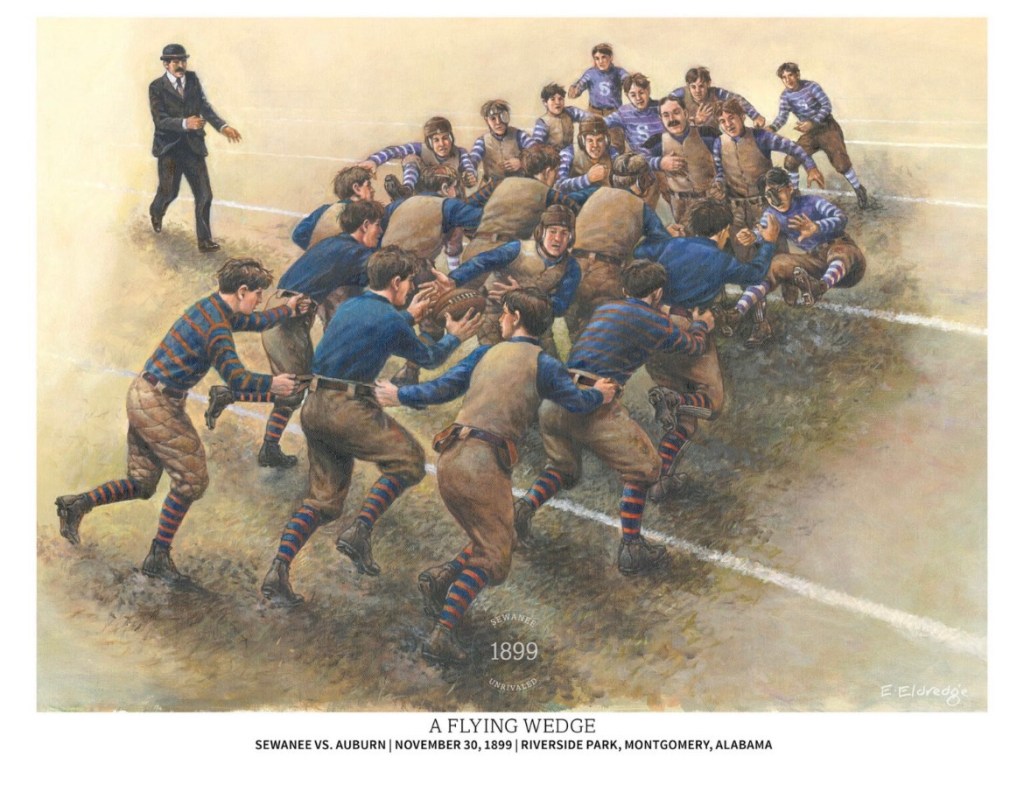
I use the word wedge advisedly. At the beginning of the 20th century, it was the “flying wedge” formation in college football that nearly brought the sport to an end due to its brutality and on-field deaths.
The Latest Panic
Here’s today’s issue. A fifth-year eligible player cut by the Cleveland Browns wants to return to college football, because by today’s rules he can. His name is Dae’Quan Wright, a tight end who played the past two seasons for Lane Kiffin at Ole Miss. Under the current transfer and eligibility rules, players who go undrafted or get cut by a pro team can reclaim their remaining college eligibility — a door that didn’t used to even exist.
Kiffin has since moved to LSU and says fine, Dae’Quan, join me in Baton Rouge.
The 16 SEC school presidents panicked and passed an emergency rule declaring that anyone who signed a pro contract, appeared on an NFL, NBA, WNBA, or G League roster, or declared for a draft without withdrawing is now ineligible. But a Louisiana judge immediately issued a temporary restraining order for Wright and fifteen other players from the Class of 2022 that supposedly overrides the conference rule.
The whole thing is stupid.
The Fiction Was Always Bent
College football and basketball haven’t been what they purport to be for over half my life. Maybe back in 1963, when Jerry Harkness led Loyola of Chicago to the NCAA basketball title over Cincinnati, was the last moment when the student-athlete ideal still had any real meaning. That team broke racial barriers, went to class, and won a championship. You could still believe, at least a little, that college sports was an ancillary part of education, like it was meant to be.
But even then, the system was already bending the truth. The NCAA coined the term “student-athlete” in the 1950s not to celebrate learning, but to avoid paying workman’s compensation to injured football players. It was a legal strategy, not a philosophy.
The NIL Era and the Removal of the Veil
Today, NIL has blown apart whatever remained of the old amateur mythology. A top college player can make more money at 19 than he would as a fringe professional. Where exactly is the line that is supposed to separate the two? College football and basketball are giant entertainment complexes and feeder systems to the pros, and just as nakedly professional.
This moment reminds me of the International Track Association in the 1970s. ITA was the first attempt at a professional track circuit. But it ran into the same hypocrisy that’s playing out now: a sport pretending it isn’t professional long after everyone involved knew better.
Stars like Jim Ryun, Kip Keino, and Ben Jipcho signed on, and the ITA drew crowds of 20,000, once filling Nickerson Field in Boston for a meet.
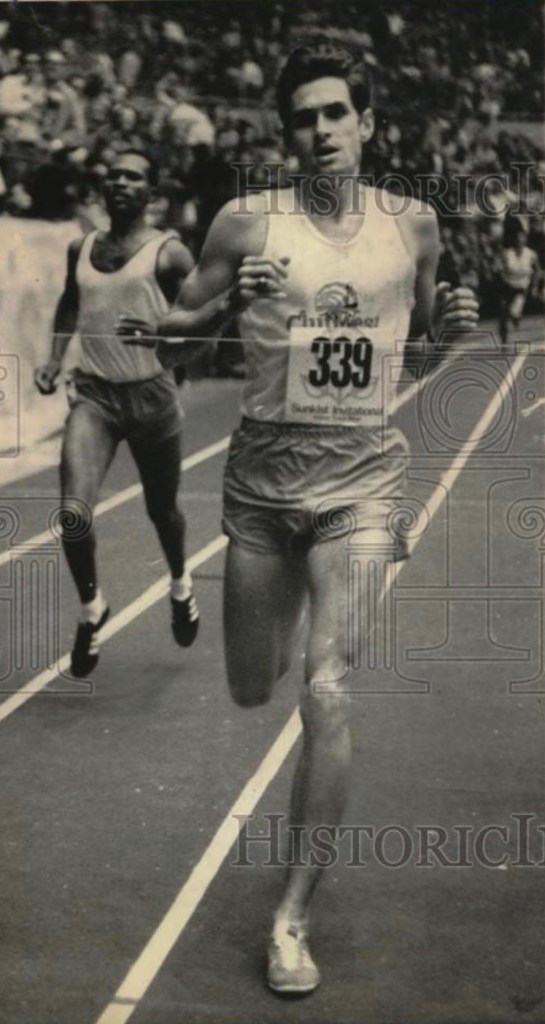
But the ITA collapsed because the 1976 Montreal Olympians realized they could make more money in Europe under the table as “amateurs” than they could as professionals with ITA. When no new blood came in to compete with or replace the aging stars, fans stopped coming.
Running has always had money flowing to athletes; it just maintained a fiction until the veil finally fell in the early 1980s — interestingly, pushed along by the growing sport of road running.
The Tail Wagging the Dog
Football and basketball are still clinging to vestiges of the old fiction. These are the two revenue-generating sports where the tail of athletics is wagging the dog of education. The emergency SEC rule is not about who is amateur and who is pro; it is about control. It is about preserving the illusion that universities are guardians of youth development rather than operators of multimillion-dollar entertainment businesses.
The Age Gap Problem
The age issue is real in football: 18- and 19-year-olds competing against 24- and 25-year-olds is the flying wedge issue of today’s game. In college track, the issue was simple fairness.
Remember when Tanzania’s 1980 Olympic 5000m silver medalist Suleiman Nyambui was still competing for UTEP? Or when Kenyan world record holders Henry Rono and Samson Kimombwa in their mid-20s competed for Washington State against American teenagers Alberto Salazar and Rudy Chapa of Oregon?
The NCAA dealt with that for years until they imposed age limits. Football adds a layer of danger because physical maturity matters more in a collision sport. But money rules.
When the highest-paid public employees in many states are college coaches, and governors influence university presidents who influence athletic departments, you get a nation of Friday Night Lights that shines spotlights on revenue, not on education.
Drop the Veil
As I mentioned at the top, this is not the first time NCAA sport has found itself twisted by its own contradictions. In 1905, President Theodore Roosevelt and Congress were on the verge of shutting down college football altogether because of the injuries and deaths piling up on the field. They finally outlawed the flying wedge, the sport’s most dangerous formation, and the sport survived.
Periodically, college sports — what we once euphemistically called amateur sports — have needed outside intervention to save them from their own hypocrisy and greed. Way back when, the threat was physical danger. Today, administrators are trying to avoid the rising wedgy created by their own hypocrisy over eligibility, professionalism, and control — e.g. money.
Revenue-based college sports are professional. Have been for a long time. So just admit what they are. Then have an honest conversation about age, safety, roster logic, and governance, instead of pretending the veil isn’t there and the wedgy isn’t starting to go from uncomfortable to painful.
END


Thanks Tony
Nice article but 2 things. ITA died because attendance collapsed. The problem was the same small group competing week after week. Also being banned from the Olympics.
Also in 1906 college football passed a rule allowing the forward pass opening the game. There were 21 deaths in high school football in 1905. Primarily players getting kicked in the head during scrums.
Thanks. I was going to add the forward pass addition that, along with the banning of the flying wedge, helped open the Sport and save it. And yes, the reason for the same old same old every week at the ITA was because they could not lure new blood because the new blood was still amateur and making more money than the professionals. So it’s all tied together. Appreciate the comment.
Toni