
Watching this weekend’s NCAA Cross Country Championships in Terre Haute made me think they should start calling it the Cross Borders Championships.
Based on the scoreboard, I found myself wondering how much we were measuring coaching and development—and how much we were measuring access to the deepest recruiting pipelines.
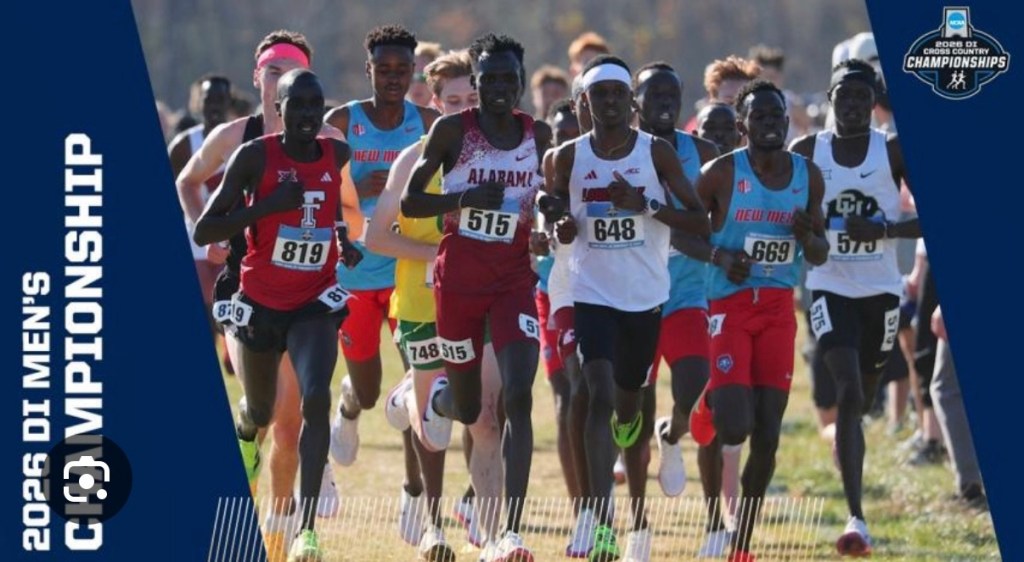
In the women’s race, not only were 17 of the top 20 finishers from Kenya, but the top two finishers, Hannah Gapes from NC State and Salma Elbadra of South Carolina, represent New Zealand and Morocco. The only American in the top 20 was Indiana freshman Katy Zane in 15th. In the men’s race, 8 of the top 10 were Kenyan, including the first five.
We have seen variations on this theme before, but never quite this starkly. In the late 1970s, it was just a few programs, notably Washington State under John Chaplin and UTEP under Ted Banks. Among others, Chaplin recruited Henry Rono, who won NCAA cross country titles in 1976, 1977, and 1979 — while famously breaking four world records in a span of 81 days in 1978.
Banks built UTEP into 17 national titles on the grass and track in nine years. At Oregon, the Americans trying to break through were roommates Rudy Chapa and Alberto Salazar. Competing alongside them were East Africans in their mid-20s. When Salazar won the 1978 XC title, he was 20. Rono was 26.
Tanzania’s Suleiman Nyambui attended UTEP from 1978 to 1982, graduating at age 29 after winning 15 NCAA titles, including the 1980 cross country title and the Olympic silver medal in Moscow in the 5000m. Is that who should be competing against 18 to 22-year-old American kids for collegiate titles?
The international pipeline didn’t just run out of the East African highlands. Western Kentucky had its British Invasion in the 1970s. Villanova had Jumbo Elliott’s Irish connection beginning in the late 1940s. Later, Arkansas under John McDonnell turned the model into a dynasty that lasted over a full generation.
The issue was never the passport. It was the pipeline.
The difference today is scale. In the 1970s, the pipeline was a few coaches and a handful of personal connections. Today it is a system: managers and former athletes turned brokers, shoe company money for camps, admissions offices used to clearing older internationals, and a transfer portal that moves them freely. And it is no longer just the men. Alabama’s entire championship scoring squad of women was Kenyan.
There is a school of thought that says American kids gain an advantage by running against superior athletes, even if they do not win right away. There is truth in that, mostly when the foreign athlete is a teammate. Training together every day is iron sharpening iron. Racing against them alone, however, can just mean losing a title you might have won under an older, less industrialized system. And titles matter, as does All-American recognition.
Still, developing a foreign pipeline is not gaming the system. The foreign-born runners in Terre Haute were not breaking a rule by accepting a scholarship. They were using an opportunity the American collegiate system offered them, the same way international students win academic scholarships.
Whatever fairness questions we ask about the system, we should not confuse them with a judgment about the young people accepting its opportunities.
I was reminded of that last weekend while working the livestream at Flanigan’s Rockin’ Rib Run 10K in Miramar, Florida with Dave Milner. Dave wasn’t born here. He grew up in Newbury, England, and came to the United States for college because he hadn’t applied himself fully in high school and didn’t meet the university exam standards back home. America offered him another chance.
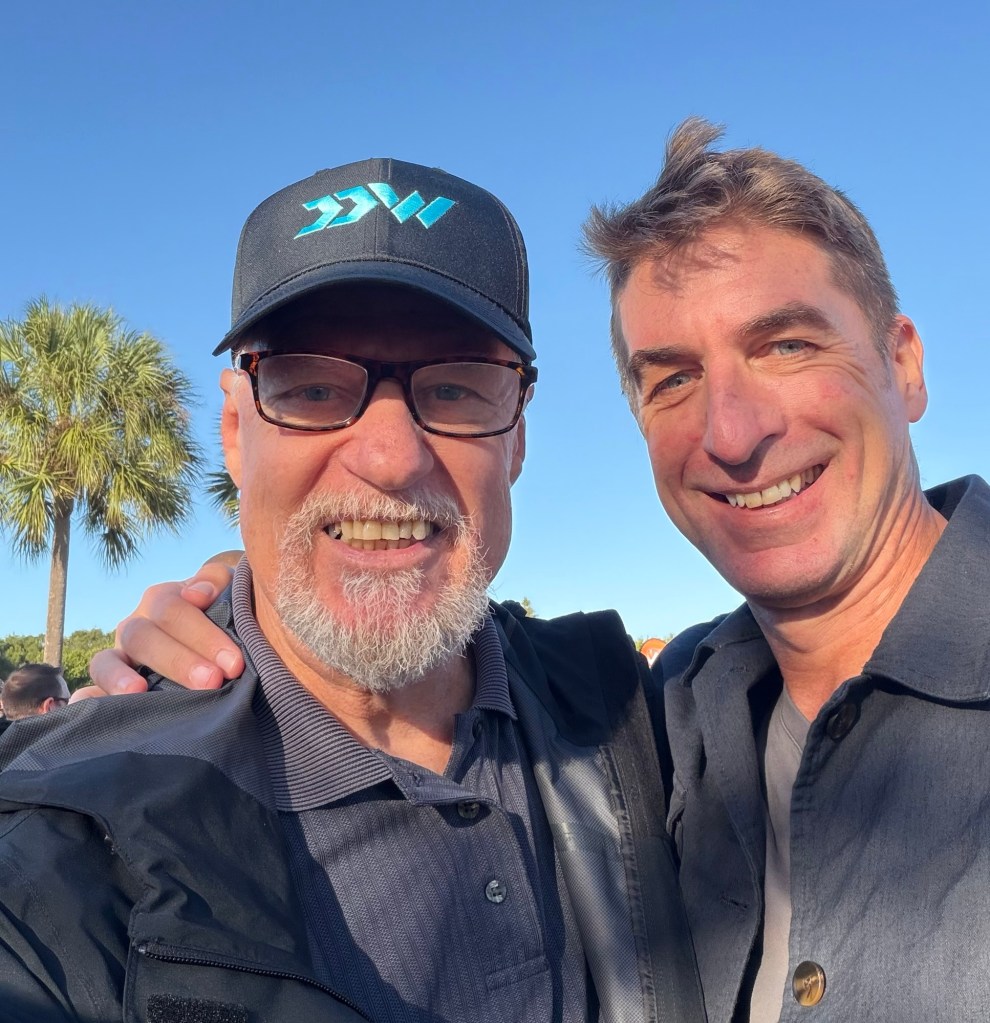
First, he ran for Belmont University in Nashville before transferring to SUNY-Cortland, where he ran and studied under legendary coach Jack Daniels, graduating in 2000.
Today, Dave lives back in Nashville, where he’s a coach, race announcer, and founder of the Music City Track Carnival. He first came as a student. He stayed long enough to become part of the fabric of American running.
As I watched Terre Haute, I found myself thinking about Dave’s journey. Not because he won an NCAA title, but because he represented a tradition as old as America itself: young people arriving from somewhere else, believing that America might offer possibilities they could not find at home. My own mother was just such a traveler, arriving in America after World War II. So for me, this is not theoretical.
Some of these athletes will return home after graduation. Some will stay. A few may become the next Dave Milner. Some have already followed a path from collegiate running to service in their adopted country.
Kenyan-born Elkanah Kibet ran for Auburn and went on to serve in the U.S. Army while competing in the World-Class Athlete Program. So did Captain Sam Chelanga, also from Kenya, who won two NCAA cross country titles for Liberty —both in Terre Haute — before serving and competing under the U.S. flag. They came as student-athletes. They stayed to serve.
Like most things, this issue does not split along a tidy either-or binary. There is a legitimate debate about how American collegiate sports should balance international recruiting with opportunities for young Americans.
In the 1980s, the NCAA instituted an age rule to try to solve the problem of older internationals like Henry Rono and Suleiman Nyambui coming onto U.S. campuses. It was challenged in court and upheld. This year’s answer is the new 5-for-5 rule adopted in June, which starts a five-year clock at enrollment or the academic year after your 19th birthday, whichever comes first. It applies to prospects enrolling in fall 2027 or later. But it, too, is already being challenged in court.
Even so, an age rule won’t truly level the field. Thanks to altitude and a rural childhood spent in motion, East Africans can often be world beaters by their late teens, when most American kids are still building their aerobic base. Eliud Kipchoge was only 18 when he outkicked Hicham El Guerrouj and Kenenisa Bekele to win the world 5000-meter title in Paris in 2003.
The fear is that once you believe the winner in Terre Haute was decided by a recruiting network, you stop believing in NCAA cross country as peers racing peers. The cost is credibility.
The wall between NCAA and professional sport has become a semi-permeable membrane. Consider Hannah Gapes, the 22-year-old from NC State who took the women’s title in Terre Haute. In September she finished ninth at the World Road Running Championships in Copenhagen over 5k representing New Zealand. Two months later she’s a member of the NC State Wolfpack winning the individual NCAA cross-country championship.
Her story complicates any easy argument. Her international success shows the level collegiate runners now face. Her progression at NC State also shows that recruiting international talent and developing it are not mutually exclusive. Over three years in Raleigh, she went from eighth to fifth, to first under coach Laurie Henes.
Growing up in St. Louis,, I played on my St. Margaret’s of Scotland parish basketball team. For the Monsignor Sullivan citywide tournament, each parish could recruit as many as two varsity high school players. Only two. Our team was smart enough to go get JoJo White, who played at McKinley High, went on to become an All-American at Kansas and a Hall of Famer for the Boston Celtics. Needless to say, we won because we had JoJo. But we could only recruit two.
Maybe that could be the standard for the NCAA regarding international athletes. Not zero. Two. Enough to make international recruiting part of building a team, without making it the foundation of the entire program.
We know where this weekend’s runners finished. What we don’t know yet is what they might start next. Years from now, after this weekend’s medals and trophies are collecting dust, athletes we saw competing may be coaching, starting businesses, organizing events, and strengthening the communities they joined.
If even a handful follow a path like Dave Milner’s, America will have gained far more than a few points on a results sheet. And that would be a result worth celebrating.
Dave Milner’s story is a reason to value the opportunity America offers. It is not a reason to stop asking how collegiate competition should be structured. We can welcome the runners and still debate the rules.
Call it Cross Borders. Call it Cross Purposes. Call it still unsettled.
END


This is good balanced thinking, Toni, and evidently timely. There is another side to the issue. At the New Zealand track and field championships one year, held early March, I calculated that 46 of our best young athletes (senior and junior age-groups) missed the champs because they were on scholarships in America. No wonder many fields were weak. I wrote to Athletics New Zealand suggesting they consider the problem, and perhaps seek sponsorship to fund those athletes to return for key events, like champs in Olympic years. The response was silence. Too hard.
We need pro-active thinking that retains liberal values – belief in freedom of choice and movement. I created a scholarship for student runners at Victoria University of Wellington not because I want to stop our young people from seeking opportunity, but to offer an alternative that in many ways is better. Many good runners are good academically. Our universities are on the whole academically better than American ones at undergraduate level (that’s an informed opinion). We have good coaches, though based mostly in clubs, not colleges. For a small country, it’s a multiple and serious loss when the students stay on to make their lives in America, usually because they fall in love, which is not unknown at ages 18-22.
Other problems like exploitative coaching in American universities, pushing athletes into wrong events for team points (most common indoors) and lack of provision for those who get injured, all need thought. Not for the first time, Mr Reavis, you invite us to scrutinise a can of worms.
Meet is a joke now. I refused to watch. Alabama won with 6 Kenyan women. You don’t even have to recruit or coach since Scholarbook does all the work.